
The Hebrew word for burnt offering is olah (עֹלָה). Its verb form is translated as “to go up” or “ascend.”
This is the only offering in which the whole animal is consumed on the altar (except for the hide); no part is eaten by the priest or the offerer. After being flayed, the skin is given to the officiating priest as a prebend.
The olah is the most frequently mentioned of all the sacrifices in the Hebrew Scriptures, albeit not the most frequently offered throughout the year. Of the three sacred sacrifices (burnt offering, grain offering, and peace offering), it stands out as the most holy, for no creature partakes of it.
In this article, we are going to focus on the instruction and purpose of the burnt offering as it pertains to a voluntary private offering, but here are the public burnt offerings commanded by the law:
- Daily: Offerings of lambs each morning and evening
- Sabbath: Additional lambs offered on the Sabbath
- New Moon and Festivals: Offerings for Passover, Weeks, and Trumpets
- Day of Atonement: Special offerings for both the priests and the people
- Feast of Booths: Daily offerings throughout the seven days of the feast
- Purification and Special Occasions: Offerings following childbirth, bodily discharges, Nazarite completion, and leprosy cleansing
The guide for performing the voluntary private burnt offering is found in the book of Leviticus (“pertaining to the Levites”).
Leviticus 1:1–17 guides both the offerer and the priest, enabling the lay Israelite to take an active role in communicating with God. Leviticus 6:8–13, in turn, contains the detailed priestly instructions.
The types of animals that could be offered for a burnt offering are as follows: if it is from the herd, a bull; from the flock, a male sheep or goat; and if it is a bird, a turtle dove or young pigeon.
Unlike sin or peace offerings, the sheep, goat, and bull follow the same ritual steps. (Side note: goats are not to be offered for the public burnt offering.) The sheep, goat, and bull should be a year old.
Turtle doves and young pigeons were domesticated and plentiful. The provision regarding birds was added for the poor among the people so that everyone could participate. This is supported by their inclusion in the purification offerings (Leviticus 5:7–10; 12:8).
The altar for sacrificing burnt offerings is situated inside the courtyard, in front of the tent of meeting. Between the tent of meeting and the altar lies the laver, used for washing the hands and feet of the Levites when entering the tent of meeting and, in this instance, the slaughtered animal.
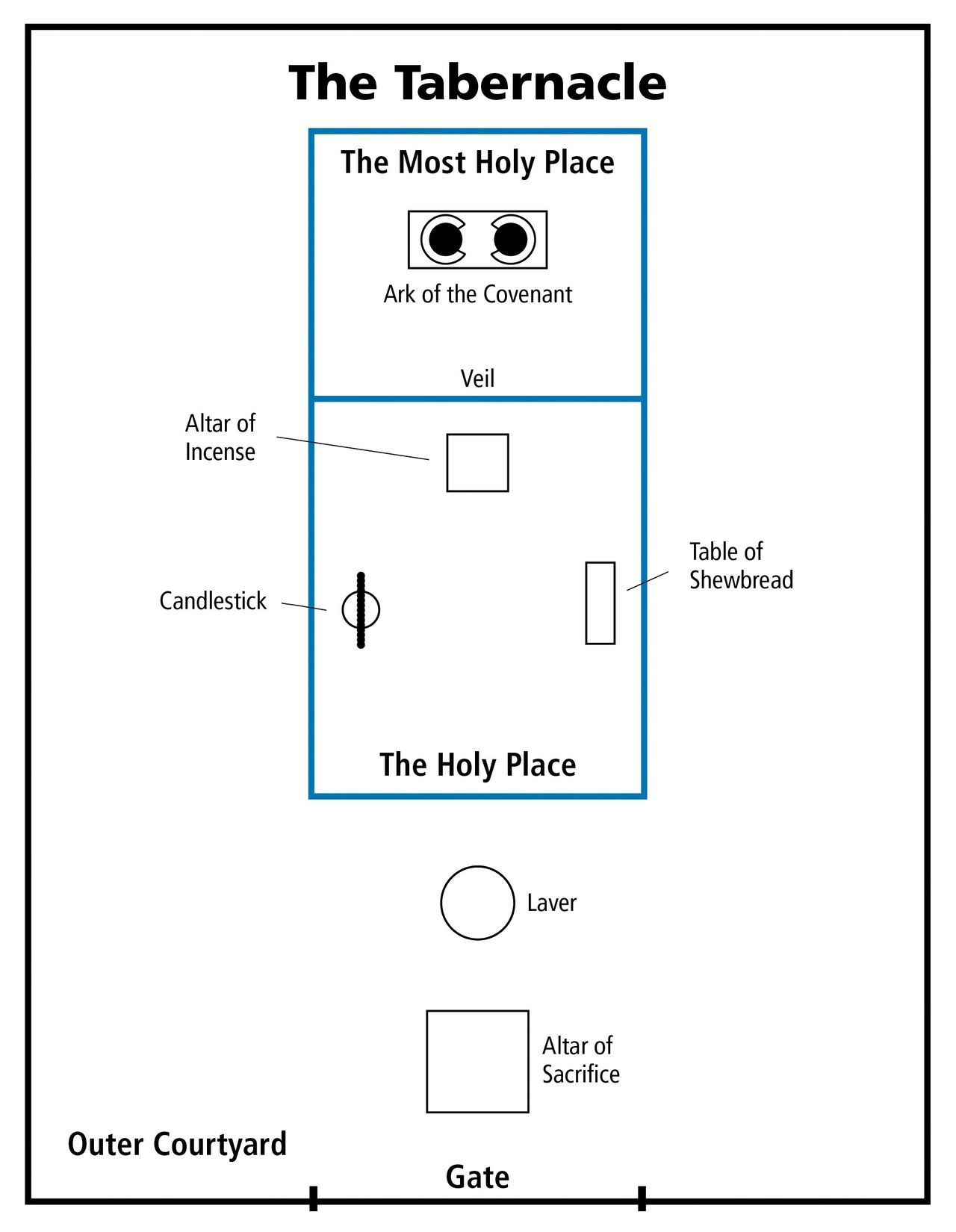
First, the offerer is to lay his hand on the head of the animal. This act is not related to the transferring of sin, as it is in the scapegoat rite.
The scapegoat rite explicitly mentions the laying of both hands and the confession of the sins of the people over it, rather than one, which nullifies the same expectation in the burnt offering. Instead, it serves to identify the one who offered it before God.
The purpose of the laying of hands is further confirmed by comparison with other identification rites.
In the case of the guilt offering, money could be substituted, and the offerer is identified when he or she hands it over. For the grain offering, the offerer prepares everything and gives it to the priest, eliminating the need for an additional identification step.
Hand-leaning is also absent with birds; the offerer simply presents the bird to the priest, who completes the rest of the ritual.
Rabbinic tradition permits acts like slaughtering, flaying, or washing to be assigned to others. However, the laying of hands must be performed by the offerer for the sacrifice to be acceptable.
In the same tradition, the laying of hands is performed on the northern side of the altar, where the animal and the offerer stand facing west (toward the sanctuary), with the priest also standing facing west.
The offerer is the one to slaughter (sacred slaughter: slitting the throat) the animal at the north side of the altar (according to Mishnah Zevachim 5:1).
The priest takes the blood and sprinkles it on all sides of the altar. While the priest sprinkles, the offerer flays (flaying does not include the head and the shin), quarters the animal, and washes its entrails and shin.
The washing of the entrails does not necessarily include all the organs that are burned, but only specific organs related to the removal of excrement.
Sprinkling the blood atones for sin as blood represents the life of the animal and the debt of sin is paid with life.
The priest takes the quartered pieces, the head, the washed organs and shin, and the fat (suet; there are differing opinions on exactly which fat is included: fat found on the liver, fat found on various internal organs, fat of the diaphragm) and places them on the altar after arranging the wood and stocking the fire.
Although the type of wood added to stock the fire isn’t specified, the Mishnah suggests different options: some passages permit all woods except olive and vine, as they make poor fuel, while others specifically list fig, pine, and nut.
In contrast, the Book of Jubilees is precise, deeming only cypress, bay, almond, fir, pine, cedar, sycamore, fig, olive, myrrh, laurel, and aspalathus acceptable, and it further mandates that this wood must be hard, new, and clean, free from dark spots (decay).
In the case of bird offerings, the priest performs everything. He kills the bird, drains the blood, and removes the crop (pouch in a bird’s throat) and feathers.
The priest kills the bird by pinching off the head at the neck with his fingernail/hand. This method is applied to both the bird Burnt Offering (where the head is completely severed) and the bird Sin Offering (where the head is pinched but not completely severed).
Then the priest splits the wings without dividing the bird completely. Holding onto the two wings, he tears the bird just enough to enlarge the body area and make it appear larger and a more acceptable gift, and then burns it on the altar.
The east side of the altar is where the ash from previous sacrifices and the discarded parts of the bird go.
The Purpose of the Burnt Offering
The burnt offering is a gift that serves different purposes on different occasions.
It is used as an atoning sacrifice for sin (see Leviticus 14:20; Ezekiel 45:15, 17). In other places, its purpose is related to joyous occasions, such as the fulfillment of vows or a freewill offering (see Leviticus 22:17–19; Numbers 15:3).
From its name and other references, the olah is an invitation gift, a pleasing aroma that ascends to the heavens so that God would look with favor on any requests an Israelite might have.
Some requests mentioned include: Samuel offered a burnt offering and cried out to God to save the people from the Philistines (1 Samuel 7:9); David offered a burnt offering to stop the plague (2 Samuel 24:21–25); and the Israelites offered it after a day of fasting and asked God whether to go again to battle the sons of Benjamin.
The purpose of the olah is appeasement, which encompasses a range of expressions such as thanksgiving, homage, and expiation, while it can also function as a voluntary offering accompanying petition or intercession.
Reference Books
- Leviticus 1-16 (The Anchor Yale Bible Commentaries)
- The JPS Torah Commentary: Leviticus


